Complete & Partial Dentures in Karaikkudi
Missing Multiple Teeth and Looking for a Comfortable Replacement Option?
Complete and partial dentures are removable dental prostheses designed to replace missing teeth, restore chewing ability, improve speech, and support the natural appearance of your face. Whether you have lost several teeth or all the teeth in one or both jaws, dentures can help restore everyday function while improving overall oral comfort. At Thamba Kids & Family Dentistry, every denture is carefully planned to match your oral condition, jaw structure, and functional needs. A personalised assessment helps determine whether complete or partial dentures are the most suitable solution for restoring your smile and maintaining long-term oral health.
Complete & Partial Dentures in Karaikkudi for Restoring Missing Teeth and Everyday Function
Losing multiple teeth can affect much more than your smile. It may make chewing difficult, change the way you speak, reduce facial support, and place additional pressure on your remaining natural teeth. Replacing missing teeth at the right time helps restore oral function while supporting the health of the surrounding teeth and gums.
At Thamba Kids & Family Dentistry, we provide complete and partial dentures in Karaikkudi that are individually designed to fit comfortably, restore bite function, and improve everyday confidence. Every denture is planned according to the number of missing teeth, the condition of your gums, jaw structure, and your overall oral health to provide a stable and natural-looking result.
What Are Complete and Partial Dentures?
Complete and partial dentures are custom-made removable dental prostheses used to replace missing teeth. The type of denture recommended depends on how many natural teeth remain and the overall condition of your mouth.
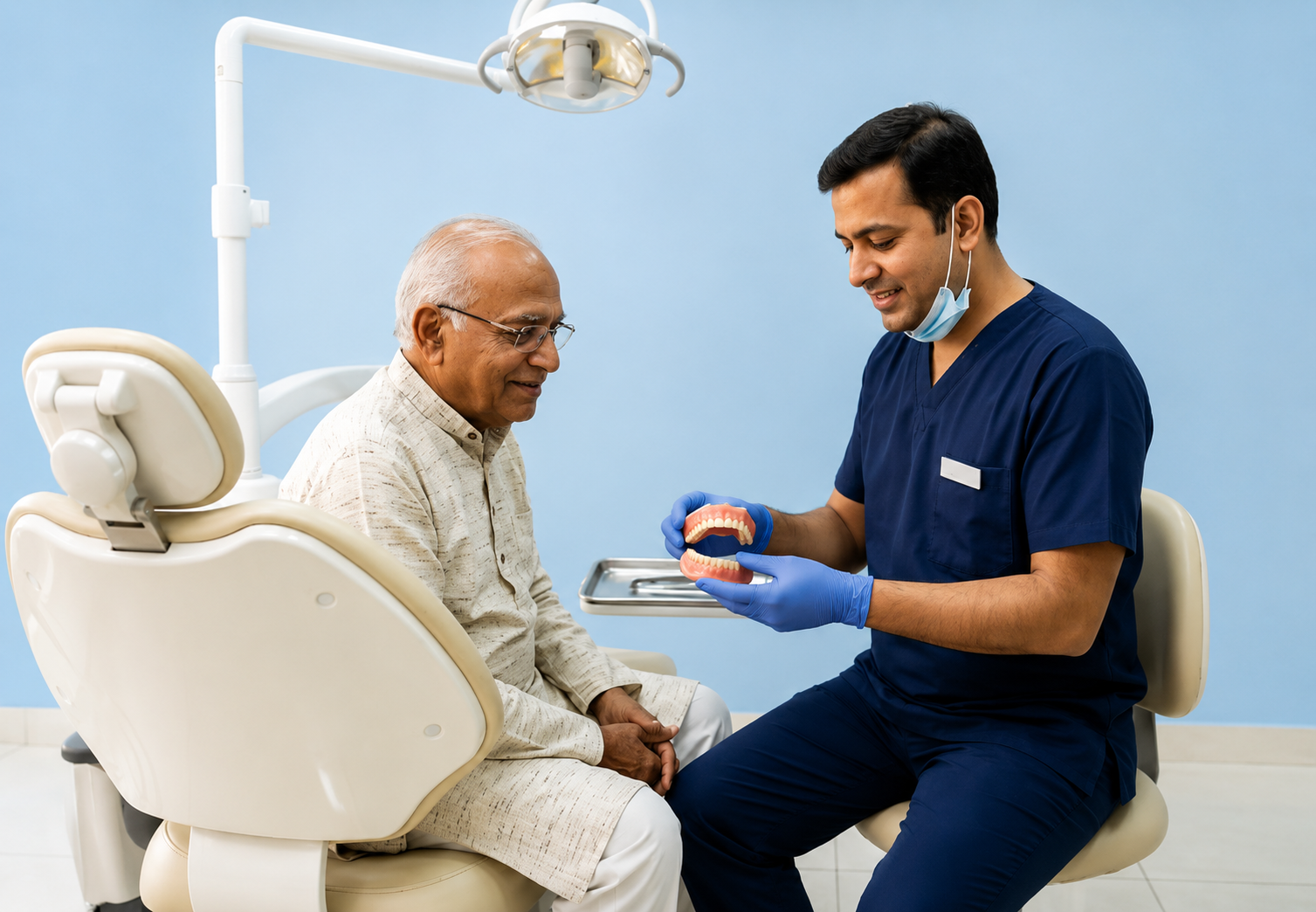
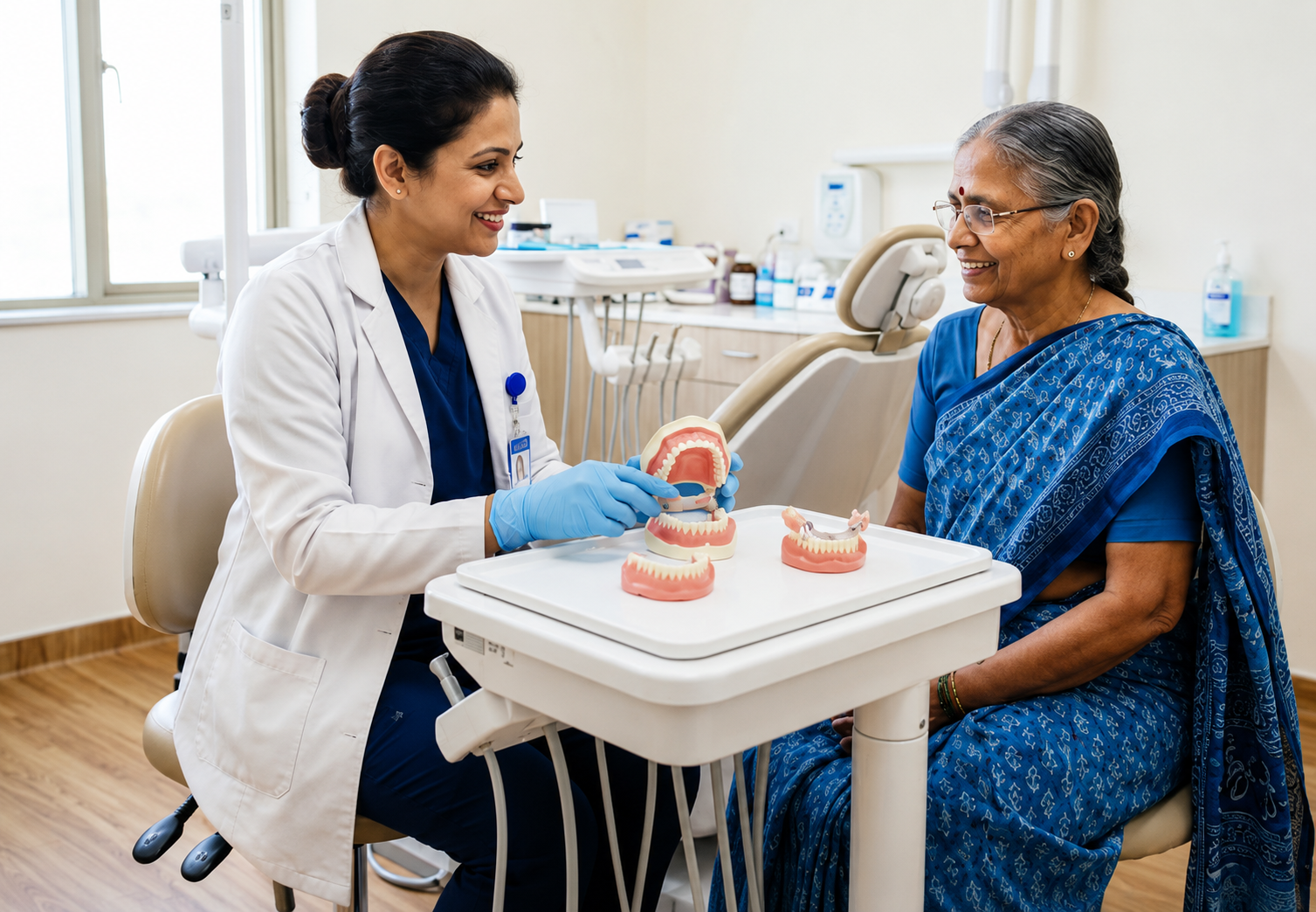
A complete denture replaces all the teeth in the upper jaw, lower jaw, or both when no natural teeth remain. A partial denture replaces one or more missing teeth while fitting around your existing healthy teeth to restore function and appearance.
Rather than simply replacing teeth, dentures are designed to restore chewing efficiency, support speech, and maintain the balance of your bite.
How Do You Know If Dentures Are the Right Tooth Replacement Option?
Dentures may be recommended when several or all natural teeth are missing and a removable tooth replacement is the most suitable option for restoring oral function. The decision depends on your oral health, the condition of your remaining teeth, jawbone support, and your individual treatment goals.
Your dentist may recommend dentures if you:
- Have lost multiple teeth
- Have no remaining teeth in one or both jaws
- Need a removable tooth replacement
- Have healthy gums that can support a denture
- Want to restore chewing and speech
- Require a customised prosthetic solution based on your oral condition
A comprehensive dental examination helps determine whether complete dentures, partial dentures, or another tooth replacement option is the most appropriate choice.
Complete Dentures vs Partial Dentures – Which Option Is Right for You?
The choice between complete and partial dentures depends on the number of remaining natural teeth and the overall health of your mouth. Both options are custom-designed to restore function, improve comfort, and support everyday activities.
| Feature | Complete Dentures | Partial Dentures |
|---|---|---|
| Purpose | Replace all teeth in one or both jaws | Replace one or more missing teeth while preserving remaining natural teeth |
| Recommended For | Patients with no remaining natural teeth | Patients with healthy teeth that can support a removable denture |
| Support | Rest on the gums and underlying tissues | Supported by natural teeth and surrounding oral tissues |
| Primary Goal | Restore full dental arch function | Fill gaps while maintaining existing teeth |
| Treatment Planning | Based on jaw shape, gum condition, and bite | Based on the position of remaining teeth and bite relationship |
Following a detailed examination, your dentist will recommend the option that best supports your oral health and long-term functional needs.
What Happens If Missing Teeth Are Not Replaced?
Replacing missing teeth is about more than appearance. Over time, untreated tooth loss can affect the way your mouth functions and may influence the position of your remaining teeth.
Missing teeth may contribute to:
- Difficulty chewing certain foods
- Changes in speech
- Movement of neighbouring teeth
- Reduced support for facial tissues
- Bite imbalance
- Increased pressure on remaining teeth
Early replacement helps maintain better oral function and supports long-term dental health.
How Do Dentures Help Restore Everyday Function?
Dentures are designed to replace missing teeth while helping patients perform everyday activities more comfortably. A properly fitted denture supports normal oral function by restoring balance to the bite and improving the ability to eat and speak.
Well-designed dentures help support:
- Comfortable chewing
- Clearer speech
- Balanced bite function
- Facial support
- Improved confidence during everyday interactions
- Better distribution of chewing forces
Every denture is individually adjusted to achieve a comfortable fit while supporting your long-term oral health.
Can Complete Dentures Replace All Missing Teeth?
Yes. Complete dentures are designed to replace all missing teeth in the upper jaw, lower jaw, or both. They restore the dental arch, improve chewing ability, support speech, and help maintain the natural shape of the face when no natural teeth remain.
Before recommending complete dentures, your dentist evaluates:
- Overall gum health
- Jawbone and ridge condition
- Oral tissue health
- Bite relationship
- Medical and dental history
- Functional expectations
A personalised assessment ensures the denture is designed to provide stability, comfort, and everyday function.
Can Partial Dentures Replace Several Missing Teeth?
Yes. Partial dentures are recommended when healthy natural teeth remain and can support a removable prosthesis. They fill the spaces created by missing teeth while helping preserve the alignment and function of the remaining teeth.
Partial dentures may be suitable when:
- Multiple teeth are missing in one area
- Healthy supporting teeth remain
- Fixed tooth replacement is not the preferred option
- Restoring chewing efficiency is important
- Maintaining natural teeth is possible
The final treatment recommendation depends on your clinical examination and long-term oral health goals.
What Should You Consider Before Choosing Dentures?
Choosing a denture involves more than replacing missing teeth. The success of treatment depends on selecting the option that matches your oral condition, lifestyle, and functional requirements.
Your Dentist Will Consider
- Number of missing teeth
- Condition of the remaining teeth
- Health of the gums
- Jawbone support
- Bite stability
- Speaking and chewing requirements
- Long-term treatment expectations
These factors help determine whether complete dentures, partial dentures, or another restorative option is most appropriate.
How Are Dentures Designed to Fit Your Mouth?
Every denture is custom-made to fit the unique shape of your mouth. Careful measurements and impressions help ensure the denture fits comfortably, supports normal function, and provides a balanced bite.
During denture planning, attention is given to:
- Jaw shape
- Gum contours
- Bite relationship
- Facial proportions
- Tooth size and arrangement
- Smile appearance
- Jaw movements
This personalised approach improves both comfort and long-term function.
How Do Dentures Support Facial Appearance After Tooth Loss?
Missing teeth can gradually reduce the natural support provided to the lips and cheeks. Properly designed dentures help restore this support by replacing the lost tooth structure and improving facial balance.
Dentures can help support:
- Natural facial profile
- Lip support
- Cheek support
- Smile proportions
- Overall facial harmony
The goal is to restore function while creating a natural appearance that suits your individual facial features.
Are Dentures Always the Best Option for Missing Teeth?
Not always. Dentures are one of several options available for replacing missing teeth. Depending on your oral health, the number of missing teeth, and your treatment goals, your dentist may also discuss alternatives such as dental bridges or dental implants.
A personalised consultation helps determine the most suitable option based on:
- Oral health
- Bone support
- Remaining teeth
- Functional needs
- Long-term expectations
The recommendation is based on what best supports your overall oral health rather than a one-size-fits-all approach.
Why Choose Thamba Kids & Family Dentistry for Complete & Partial Dentures in Karaikkudi?
Replacing missing teeth requires more than simply providing a denture. It involves careful planning to restore comfort, function, and a natural appearance while ensuring the denture fits securely within your unique oral anatomy.
At Thamba Kids & Family Dentistry, every denture is individually planned after evaluating your oral tissues, remaining teeth, jaw structure, and bite relationship. Our goal is to provide removable tooth replacement solutions that help patients regain everyday comfort while preserving long-term oral health.
- Comprehensive assessment before treatment
- Individually customised denture planning
- Careful evaluation of bite and jaw relationship
- Natural-looking tooth arrangement
- Focus on comfortable fit and function
- Clear explanation of available treatment options
- Patient-centred care throughout treatment
- Long-term support for denture adjustments and oral health reviews
Why Patients Trust Our Denture Care
Will Dentures Feel Natural in My Mouth?
New dentures may feel different during the initial adjustment period as your mouth adapts to the new appliance. As the muscles of your cheeks, tongue, and lips become familiar with the denture, most patients gradually experience improved comfort and confidence during everyday activities.
The adjustment period varies depending on:
- The type of denture
- Oral tissue condition
- Jaw anatomy
- Previous denture experience
- Individual adaptation
Regular follow-up appointments help ensure your dentures continue to fit comfortably and function effectively.
Can You Eat Normally with Complete or Partial Dentures?
Yes. Dentures are designed to restore chewing ability and help you enjoy a wider variety of foods. During the initial adjustment period, it is generally recommended to begin with softer foods before gradually introducing firmer foods as advised by your dentist.
Patients are usually encouraged to:
- Eat smaller portions initially
- Chew evenly on both sides
- Start with softer foods
- Cut food into smaller pieces
- Introduce firmer foods gradually
- Follow personalised dietary advice during adaptation
As you become accustomed to your dentures, chewing generally becomes more comfortable and efficient.
Will Dentures Affect the Way I Speak?
Some patients notice temporary changes in pronunciation while adjusting to new dentures. This is a normal part of the adaptation process and usually improves as your tongue and facial muscles become familiar with the denture.
Speaking comfortably often improves by:
- Practising everyday conversations
- Reading aloud
- Wearing the dentures as advised
- Attending review appointments for minor adjustments
Most patients regain natural speech as they adapt to their new dentures.
How Long Does It Take to Adjust to New Dentures?
Every patient adapts at a different pace. Some people become comfortable within a short period, while others require several weeks to fully adjust to chewing, speaking, and wearing their dentures throughout the day.
Adjustment depends on factors such as:
- Whether it is your first denture
- Complete or partial denture design
- Oral tissue adaptation
- Consistent denture use
- Follow-up adjustments when required
Patience and regular review appointments help improve long-term comfort and function.
When Should Dentures Be Relined, Adjusted, or Replaced?
Dentures may require professional adjustment over time because the shape of the gums and jawbone naturally changes after tooth loss. Regular dental reviews help ensure the denture continues to fit properly and function comfortably.
Your dentist may recommend evaluation if you notice:
- Loose-fitting dentures
- Difficulty chewing
- Sore areas on the gums
- Changes in bite
- Visible wear or damage
- Reduced stability during speaking
Timely adjustments help improve comfort and extend the functional life of your dentures.
How Can You Keep Your Dentures Comfortable for Years?
Long-term denture comfort depends not only on the denture itself but also on maintaining healthy oral tissues and attending regular dental reviews.
Healthy Habits That Support Comfortable Denture Use
- Clean dentures as instructed every day
- Remove dentures when advised by your dentist
- Maintain healthy gums and oral tissues
- Attend regular denture review appointments
- Report any looseness or discomfort promptly
- Continue routine oral health examinations even if all natural teeth have been replaced
Consistent professional care helps maintain both the fit of your dentures and the health of your mouth.
How Do Regular Denture Reviews Help Protect Your Oral Health?
Dentures should be reviewed periodically to assess their fit, function, and the health of the surrounding oral tissues. These appointments allow your dentist to identify gradual changes before they begin affecting comfort or chewing efficiency.
Regular denture reviews help monitor:
- Denture stability
- Bite relationship
- Oral tissue health
- Jawbone changes
- Areas of excessive pressure
- Overall denture function
Ongoing professional care helps ensure your dentures continue to provide reliable function and long-term comfort.
Areas We Serve
At Thamba Kids & Family Dentistry, we provide complete and partial dentures in Karaikkudi for patients seeking comfortable, personalised solutions to replace multiple missing teeth. Every denture is carefully planned to restore everyday function, improve oral comfort, and support long-term dental health.
We welcome patients from:
- Karaikkudi
- Devakottai
- Pallathur
- Kandanur
- Kallal
- Puduvayal
- Tirupathur
- Sivaganga
- Manamadurai
- Singampunari
- Kalayarkoil
- Aranthangi
- Ponnamaravathi
- Ramanathapuram
- Nearby towns and villages
Whether you're looking for complete dentures in Karaikkudi, partial dentures near Devakottai, or removable tooth replacement in Sivaganga, our team provides personalised prosthetic solutions designed around your oral health and functional needs.
Restore Everyday Comfort with a Denture Designed for You
Replacing missing teeth is about more than filling gaps—it is about restoring comfortable chewing, clear speech, balanced bite function, and confidence in daily life. Choosing the right denture begins with understanding your oral health, the condition of your gums, and the treatment option that best suits your long-term needs.
At Thamba Kids & Family Dentistry, we provide personalised complete and partial denture solutions that are carefully designed for comfort, function, and a natural appearance. Every treatment plan is tailored to help you regain everyday oral function while supporting the health of your remaining teeth and oral tissues..
Book Your Denture Consultation
If you're missing several or all of your natural teeth and would like to explore your tooth replacement options, schedule a consultation with our dental team. A comprehensive assessment will help determine whether complete dentures, partial dentures, or another restorative solution is the most suitable choice for your oral health.
Frequently Asked Questions
Yes. Complete dentures can replace all missing teeth in the upper jaw, lower jaw, or both. The treatment plan is customised according to your oral condition, jaw structure, and individual functional requirements.
Most patients wear their dentures during normal daily activities such as eating, speaking, and social interactions. Your dentist will advise you on when to remove them and provide recommendations based on your individual treatment plan.
In some situations, existing partial dentures can be adjusted or modified to accommodate changes in your oral condition. Whether modification is possible depends on the design and condition of the denture, which your dentist will assess during your visit.
Dentures are carefully designed to replace missing teeth while supporting the lips and cheeks. A well-planned denture helps restore facial balance that may have changed following tooth loss.
Regular dental examinations help evaluate the fit of your dentures, the health of your gums, and any natural changes in the jaw. Periodic reviews allow timely adjustments that help maintain long-term comfort and function.
Your dentist will advise you based on your individual oral health. In many situations, removing dentures during the recommended periods helps maintain healthy oral tissues and allows the gums to rest.
Dentures may eventually require replacement because the gums and jawbone naturally change over time. Routine dental reviews help determine when replacement or modification is appropriate.
Yes. Properly fitted dentures help restore chewing ability by replacing missing teeth and improving bite function, allowing many patients to enjoy a wider variety of foods.
Well-designed dentures are customised to fit your mouth as accurately as possible. As you adjust to wearing them and attend regular review appointments, stability and comfort generally improve.
Yes. If your dentures feel loose, cause sore areas, or become uncomfortable, a professional examination helps identify whether an adjustment, reline, repair, or replacement is needed.