Zirconia & E-max Crowns in Karaikkudi
Looking for Zirconia & E-max Crowns in Karaikkudi?
Zirconia and E-max crowns are durable, custom-made dental restorations designed to protect weakened, damaged, or root canal-treated teeth while restoring their appearance and function. At Thamba Kids & Family Dentistry, every crown is carefully planned based on the location of the tooth, your bite, aesthetic expectations, and long-term oral health. Whether you need a crown for a fractured tooth, a severely worn tooth, or after root canal treatment, our goal is to restore strength, comfort, and a natural-looking smile.
Restore Damaged Teeth with Zirconia & E-max Crowns in Karaikkudi
A damaged or weakened tooth doesn't always need to be removed. In many cases, a well-designed dental crown can restore its strength, protect the remaining tooth structure, and help you chew, speak, and smile comfortably again. Whether the damage is caused by deep decay, a cracked tooth, severe wear, or root canal treatment, choosing the right type of crown plays an important role in preserving your natural tooth.
At Thamba Kids & Family Dentistry, we provide Zirconia and E-max Crowns in Karaikkudi as part of personalized restorative dental care. Every crown is custom-made to fit your tooth accurately, support your bite, and blend naturally with your surrounding teeth. Our treatment approach focuses on preserving healthy tooth structure while restoring long-term function, durability, and aesthetics.
What Are Zirconia & E-max Crowns?
Zirconia and E-max crowns are custom-made ceramic restorations that completely cover and protect damaged or weakened teeth. They are commonly recommended when a tooth cannot be restored adequately with a filling but can still be preserved. These crowns help restore the tooth's shape, strength, chewing function, and natural appearance.
While both materials are designed to provide durable and aesthetic restorations, the most suitable option depends on factors such as the location of the tooth, the amount of remaining tooth structure, bite forces, and cosmetic expectations. Your dentist will recommend the material that best supports your oral health and long-term treatment goals.
When Does a Tooth Need a Dental Crown?
A dental crown may be recommended when a tooth has lost significant strength or structure and requires full coverage to protect it from further damage.
Your Dentist May Recommend a Crown If You Have:
- A tooth weakened after root canal treatment
- A cracked or fractured tooth
- A large filling with limited remaining tooth structure
- Excessively worn teeth due to grinding or wear
- A severely broken tooth
- A tooth affected by extensive decay
- A discoloured or misshapen tooth requiring aesthetic improvement
- A dental implant requiring a permanent crown
Early restoration with a dental crown can help preserve the natural tooth and reduce the likelihood of more complex treatment in the future.
What Problems Can Zirconia & E-max Crowns Help Restore?
Dental crowns are used to restore both the function and appearance of teeth affected by structural damage or significant wear.
Crowns Can Help Restore:
- Broken teeth
- Cracked teeth
- Worn-down teeth
- Teeth with large restorations
- Root canal-treated teeth
- Misshapen teeth
- Discoloured teeth that require full coverage
- Dental implants requiring final restoration
Every treatment plan is developed after a detailed clinical examination to determine whether a crown is the most appropriate restorative option.
Zirconia Or E-max Crowns - Which One Is Right for You?
Both Zirconia and E-max crowns are high-quality ceramic restorations, but they are selected based on different clinical needs rather than one being universally better than the other.
| Zirconia Crowns | E-max Crowns |
|---|---|
| High strength and durability | Excellent translucency and aesthetics |
| Commonly used for back teeth | Often preferred for front teeth |
| Suitable for heavy biting forces | Ideal for highly visible smile areas |
| Designed for long-term function | Designed for a natural-looking appearance |
The most appropriate material depends on your individual tooth, bite, oral health, and aesthetic expectations. Your dentist will recommend the option that provides the best balance of strength, appearance, and longevity.
How Does Your Dentist Choose the Right Crown?
Selecting the right dental crown involves much more than choosing a material. A thorough evaluation helps ensure the restoration meets both functional and cosmetic requirements.
Your dentist considers several important factors, including:
- The location of the tooth
- The amount of remaining natural tooth structure
- Bite alignment and chewing forces
- Existing dental restorations
- Cosmetic expectations
- Long-term durability requirements
- Overall oral health
This personalized approach helps create a restoration that fits comfortably, functions naturally, and blends seamlessly with your smile.
How Is Your Tooth Prepared for a Zirconia or E-max Crown?
Before placing a Zirconia or E-max crown, your dentist performs a detailed clinical examination to evaluate the condition of the tooth, surrounding gums, bite alignment, and remaining tooth structure. This assessment helps determine whether a dental crown is the most appropriate restorative solution and ensures a precise, long-lasting fit.
The planning stage is essential because every tooth has different functional and cosmetic requirements. Careful evaluation allows the crown to restore strength, chewing efficiency, and natural appearance while preserving as much healthy tooth structure as possible.
Your Dentist Will Assess
- Remaining healthy tooth structure
- Presence of cracks or fractures
- Existing fillings or restorations
- Gum health around the tooth
- Bite alignment and chewing forces
- Need for root canal treatment (if required)
- Suitability for Zirconia or E-max material
How Is a Zirconia or E-max Crown Placed?
Dental crowns are carefully designed to restore both function and aesthetics while fitting comfortably with your natural bite.
Treatment Process
Tooth Preparation
The affected tooth is carefully prepared to create enough space for the custom-made crown while preserving as much healthy tooth structure as possible.
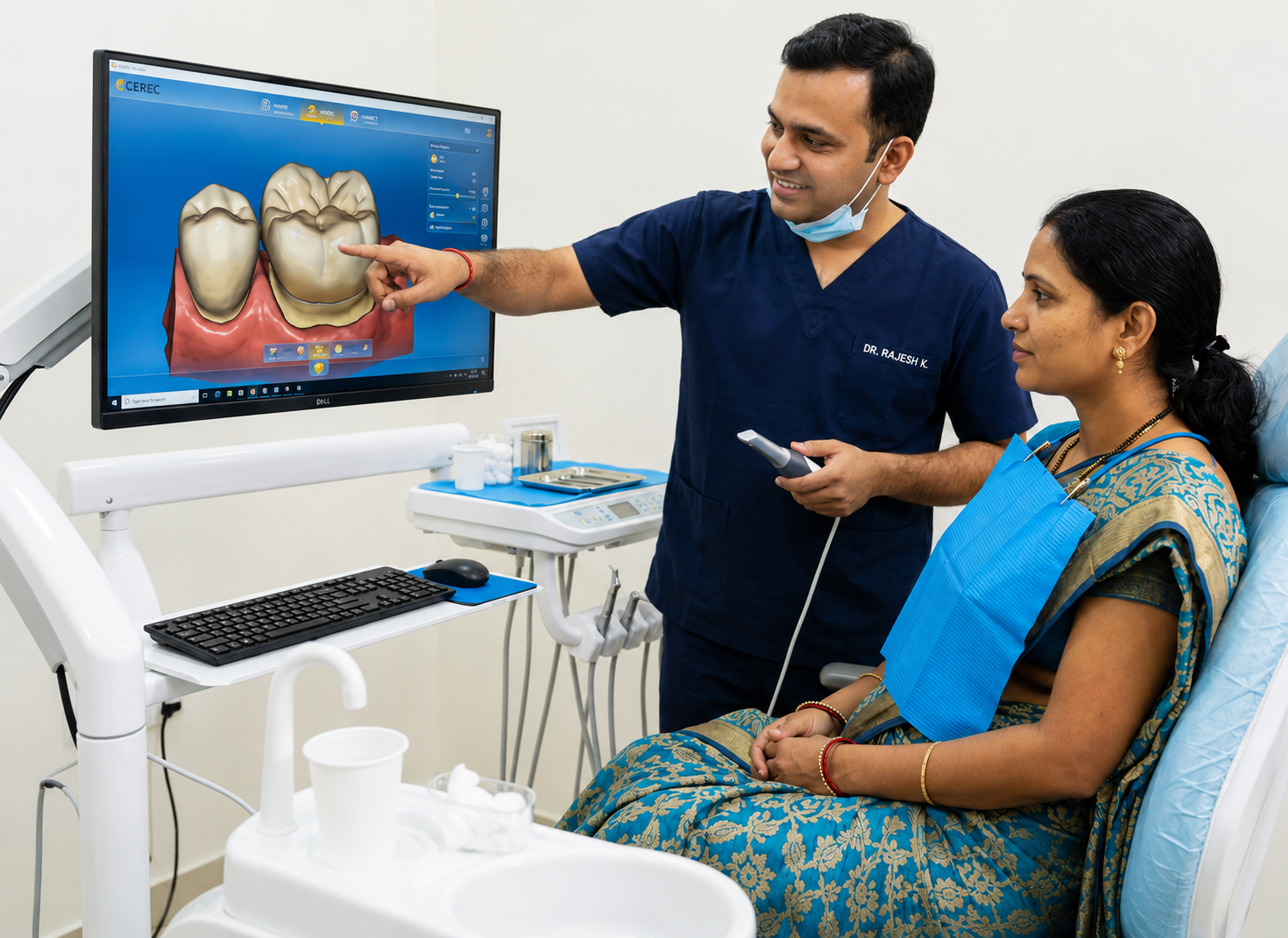
Digital Measurements or Dental Impressions
Accurate impressions or digital scans are taken to ensure the crown fits precisely and blends naturally with the surrounding teeth.
Crown Fabrication
Your Zirconia or E-max crown is custom-crafted to match the size, shape, colour, and contour of your natural teeth.
Final Placement
Once the crown is ready, it is checked for fit, bite alignment, comfort, and appearance before being securely bonded to the prepared tooth.
Why Is a Crown Often Recommended After Root Canal Treatment?
A tooth that has undergone root canal treatment may become more vulnerable to fracture because a significant amount of tooth structure has often been lost due to decay, infection, or previous restorations.
A dental crown helps reinforce the remaining tooth by providing full coverage and protecting it during everyday biting and chewing.
Your dentist will recommend whether a crown is appropriate based on:
- Remaining tooth structure
- Tooth location
- Bite pressure
- Risk of fracture
- Overall long-term prognosis
Can Every Damaged Tooth Be Restored with a Crown?
Not every damaged tooth requires extraction. In many situations, a crown can preserve a tooth that still has enough healthy structure to support a long-term restoration.
However, treatment depends on several clinical factors, including:
- Extent of structural damage
- Tooth stability
- Gum and bone support
- Presence of infection
- Overall oral health
A comprehensive dental examination helps determine whether the tooth can be successfully restored or whether another treatment option is more appropriate.
How Long Do Zirconia & E-max Crowns Last?
Zirconia and E-max crowns are designed as long-term restorations. Their lifespan depends on factors such as oral hygiene, bite forces, regular dental examinations, and overall oral health.
- Accurate treatment planning
- Proper crown fit
- Healthy surrounding gums
- Good oral hygiene
- Routine dental check-ups
- Managing teeth grinding if present
Several factors contribute to long-term success:
Regular professional reviews help monitor the condition of the crown and surrounding tooth.
Can a Crown Restore Comfortable Chewing?
One of the primary goals of a dental crown is to restore normal chewing function while protecting the remaining tooth.
A well-fitted crown helps:
- Distribute chewing forces evenly
- Protect weakened tooth structure
- Improve bite stability
- Reduce discomfort while chewing
- Restore everyday function
Every restoration is carefully adjusted to ensure it works comfortably with your natural bite.
Zirconia & E-max Crowns vs Other Crown Materials
Several materials are available for dental crowns, and each has different clinical applications.
| Zirconia & E-max Crowns | Conventional Crown Materials |
|---|---|
| Metal-free restorations | May contain metal components |
| Designed for aesthetics and function | Material varies depending on type |
| Custom colour matching | Cosmetic appearance depends on the material |
| Excellent tissue compatibility | Varies between materials |
| Suitable for many restorative situations | Selection depends on clinical requirements |
Your dentist will recommend the most appropriate material after evaluating your oral health, tooth location, functional needs, and aesthetic expectations.
Why Is an Accurate Crown Fit So Important?
A well-fitting crown plays an essential role in protecting the restored tooth and supporting long-term oral health.
An accurately fitted crown helps:
- Maintain healthy gums
- Improve chewing comfort
- Support proper bite alignment
- Protect the remaining tooth
- Reduce unnecessary stress on neighbouring teeth
Careful planning and precision during treatment contribute to both comfort and durability.
Can a Cracked or Broken Tooth Be Saved with a Dental Crown?
Yes, many cracked or broken teeth can be restored with a dental crown if enough healthy tooth structure remains. A crown covers the damaged tooth, helping restore its strength, function, and appearance while protecting it from further damage. The most suitable treatment depends on the extent of the fracture and the overall condition of the tooth.
Not every cracked tooth requires extraction. After a detailed clinical examination, your dentist will determine whether the tooth can be preserved with a Zirconia or E-max crown or whether another treatment approach is more appropriate.
What Happens If You Delay Getting a Dental Crown?
When a damaged tooth is left without proper protection, it may become more vulnerable to additional wear, fractures, or structural breakdown over time.
Depending on the condition of the tooth, delaying treatment may increase the likelihood of:
- Progressive tooth fractures
- Loss of remaining tooth structure
- Difficulty chewing comfortably
- Recurrent decay around existing restorations
- More extensive restorative treatment in the future
Seeking timely treatment allows your dentist to restore the tooth before the damage becomes more complex.
Which Teeth Are Best Suited for Zirconia Crowns?
Zirconia crowns are widely selected for teeth that experience greater chewing pressure and require excellent strength.
They are commonly recommended for:
- Molars
- Premolars
- Teeth affected by heavy bite forces
- Root canal-treated back teeth
- Severely worn posterior teeth
- Teeth requiring long-term functional support
Your dentist will assess your bite, tooth position, and restorative needs before recommending Zirconia as the most suitable option.
Which Teeth Are Better Suited for E-max Crowns?
E-max crowns are valued for their lifelike appearance and excellent light transmission, making them a preferred choice for highly visible areas of the smile.
They are often considered for:
- Front teeth
- Upper front smile zone
- Cosmetic smile restorations
- Teeth requiring excellent colour matching
- Patients seeking highly aesthetic restorations
The final recommendation depends on balancing aesthetics, strength, and the functional requirements of each tooth.
Will My Crown Look Like a Natural Tooth?
Yes. Modern Zirconia and E-max crowns are custom-made to match the colour, shape, and proportions of your natural teeth. The most suitable material depends on the location of the tooth, your bite, and your cosmetic expectations, allowing your dentist to achieve a restoration that is both functional and aesthetically pleasing.
Modern Zirconia and E-max crowns are carefully designed to blend with your surrounding teeth by considering:
- Tooth colour
- Shape and contour
- Surface texture
- Smile symmetry
- Bite alignment
The objective is to create a restoration that complements your natural smile while restoring normal function.
Can You Eat Normally After Getting a Dental Crown?
Once your permanent Zirconia or E-max crown has been securely placed and your bite has been adjusted, most patients can return to their normal chewing function.
A well-fitted crown is designed to:
- Support everyday chewing
- Restore bite efficiency
- Protect the remaining tooth
- Improve comfort while eating
- Function similarly to a healthy natural tooth
Your dentist will provide personalised advice on when to resume your normal diet after treatment.
Can Dental Crowns Be Replaced in the Future?
Although Zirconia and E-max crowns are designed for long-term use, they may eventually require replacement due to normal wear, changes in the supporting tooth, or other clinical factors.
Replacement may be considered if:
- The crown becomes damaged
- The supporting tooth develops new decay
- Bite changes affect the restoration
- The crown no longer fits properly
- Cosmetic improvements are desired
Regular dental examinations help monitor the condition of both the crown and the underlying tooth.
How Can You Protect Your Zirconia or E-max Crown?
Maintaining a dental crown is similar to caring for your natural teeth.
To help protect your restoration:
- Brush twice daily
- Clean between your teeth regularly
- Attend routine dental check-ups
- Wear a night guard if advised for teeth grinding
- Avoid using your teeth to open hard objects
- Address any discomfort or looseness promptly
Good oral hygiene and professional follow-up care contribute to the long-term success of your restoration.
Areas We Serve
At Thamba Kids & Family Dentistry, we provide Zirconia and E-max crown treatments in Karaikkudi, helping patients restore damaged, weakened, and aesthetically compromised teeth with durable, natural-looking ceramic restorations.
We welcome patients from:
- Karaikkudi
- Devakottai
- Pallathur
- Kandanur
- Kallal
- Puduvayal
- Tirupathur
- Sivaganga
- Manamadurai
- Singampunari
- Kalayarkoil
- Aranthangi
- Ponnamaravathi
- Ramanathapuram
- Nearby towns and villages
Whether you're searching for Zirconia crowns in Karaikkudi, E-max crowns near Devakottai, or dental crown treatment in Sivaganga District , our team is committed to providing personalized restorative dental care.
Restore Strength and Confidence with Zirconia & E-max Crowns in Karaikkudi
A damaged or weakened tooth does not always need to be removed. With the right restorative approach, a custom-made Zirconia or E-max crown can help preserve your natural tooth while restoring strength, function, and appearance.
At Thamba Kids & Family Dentistry, every crown is carefully planned to suit your individual dental needs, ensuring a comfortable fit and long-term support for your oral health. Whether you need to restore a tooth after root canal treatment, repair a fractured tooth, or improve the appearance of your smile, our team is committed to providing personalized restorative care for patients across Karaikkudi and nearby communities.
Book Your Dental Crown Consultation Today
If you have a damaged, weakened, or worn tooth, an early evaluation can help determine the most appropriate treatment before the condition becomes more complex.
Schedule your consultation at Thamba Kids & Family Dentistry to learn whether a Zirconia or E-max crown is the right solution for restoring your smile, comfort, and long-term oral health.
Frequently Asked Questions
The choice depends on several clinical factors, including the position of the tooth, the amount of remaining tooth structure, bite forces, and your cosmetic expectations. After a detailed examination, your dentist will recommend the crown material that best supports your oral health and treatment goals.
A well-designed dental crown is custom-made to fit comfortably with your bite. After a short adjustment period, most patients find that their crown feels natural during everyday activities such as chewing and speaking.
Zirconia and E-max are ceramic materials commonly used in modern dentistry. If you are scheduled for an MRI or another medical procedure, inform your healthcare provider about any dental restorations so they can provide appropriate guidance.
Yes. Multiple teeth can be restored when clinically appropriate. Your dentist will prepare an individualized treatment plan based on the number of teeth involved, your bite, and your overall oral health.
Routine dental examinations help monitor the condition of your crown, the surrounding gums, and the supporting tooth. Regular follow-up visits allow your dentist to identify any concerns early and maintain the long-term success of your restoration.
E-max crowns are widely recognized for their excellent translucency and aesthetic appearance, particularly for front teeth. However, the ideal choice depends on your individual clinical needs and your dentist's recommendation.
Zirconia crowns are designed to resist staining during normal use. Maintaining good oral hygiene and regular professional dental care helps preserve their appearance.
Yes. Both Zirconia and E-max crowns are ceramic restorations that do not contain metal, making them a popular option for patients seeking natural-looking dental restorations.
When properly planned and fitted, a dental crown can help restore tooth shape and improve bite balance by replacing damaged tooth structure.
Your dentist will provide specific instructions based on the type of cement used and your individual treatment. Following these recommendations helps ensure the crown remains stable during the initial period after placement.